When Life Becomes the Practice: A Reflection on Continuation
"Will the fire help her heal?"
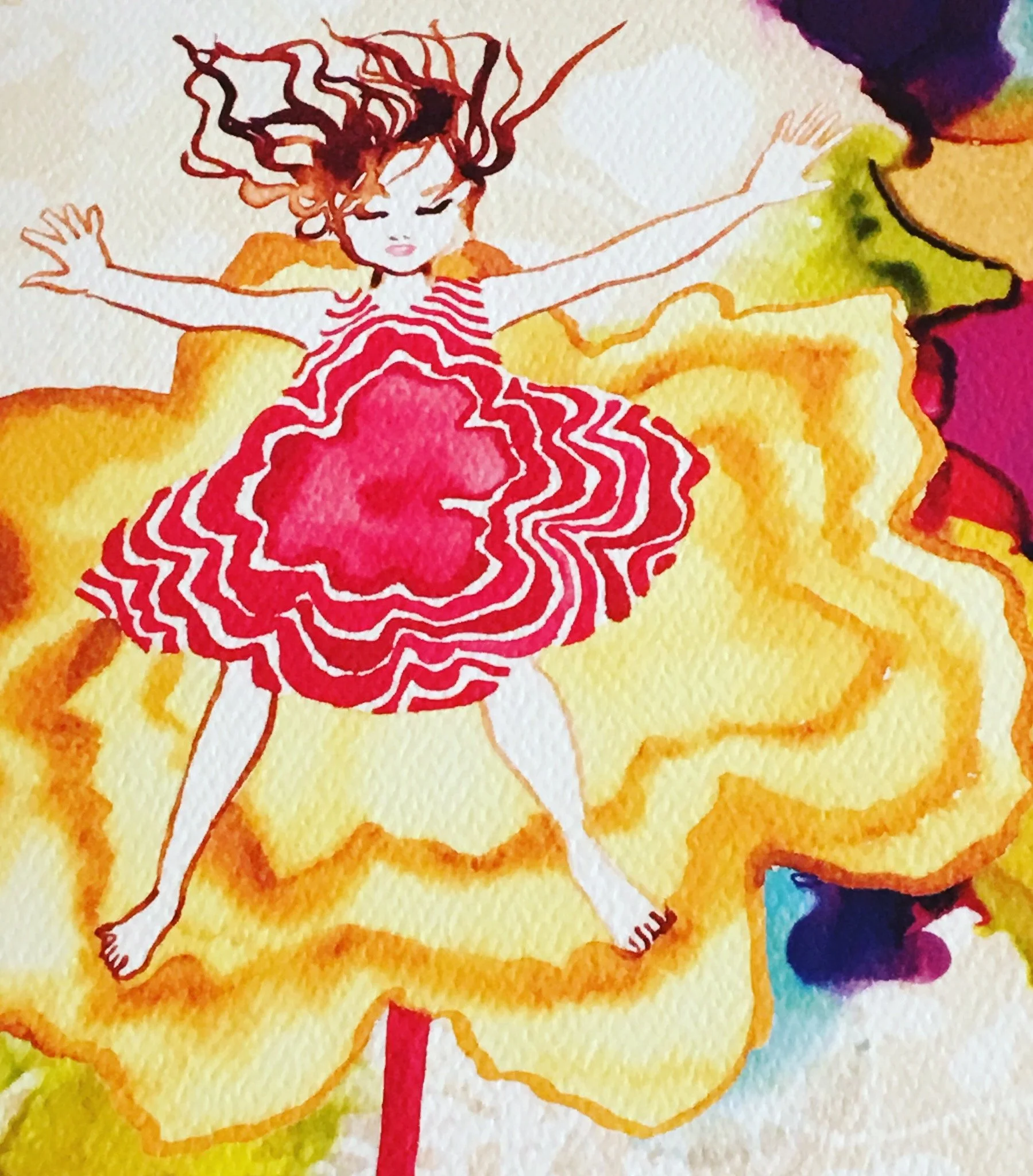
My four-year-old asked this at her first funeral. She wanted to know about healing, without all the complicated layers adults experience with death and grief. Her great aunt - a third grandmother to her - had passed away. My daughter had been dreaming vividly. The morning after, she said she'd been flying in her dreams. Then she asked if she'd see her great aunt's body again. I told her she could see her great aunt in her dreams. She answered: "Maybe we can meet and fly together."
I published my contemplative mapping framework last week, planning to apply it first to Iyengar yoga. During a period of family loss and illness, I maintained my practice by adapting it to what my body needed. I chose Iyengar yoga many years ago for its attention to alignment and restorative qualities, its growing research base, and its rigorous teacher training requirements. This practice became my path to finding stability during uncertain journeys.
My framework maps five aspects of embodied experience within one's ecological context. Our family losses became part of that ecology - multiple deaths in a short period that reshaped what practice could look like. My daughter's questions weren't separate from the practice mapping. They were central to understanding how grief, family ritual, and relational space interact when practitioners in EI/ECSE settings (or parents) maintain embodied grounding through disruption.
Through this disruption, I tracked sensory experience: the sound of my breath on the mat, the weight of my body, the temperature of grief moving through me. I tracked bodily experience: tension manifesting across my shoulders, heaviness settling in my chest, breathing becoming shallow and needing conscious deepening. I tracked cognitive processing: noticing the gap between wanting practice and accessing it, writing to make sense of continuation, questioning what contemplative mapping approaches could capture. I tracked intersubjective dynamics: my capacity to be present for my daughter's questions, holding relational space where she could process loss, navigating grief together while parenting. I tracked discursive framing: Thich Nhat Hanh's concept of continuation. These weren't separate dimensions of experience. They were one dynamic system.
Applying the framework helped me discover what it doesn't yet capture: the relational infrastructure that enabled my practice. I could maintain my Iyengar yoga because I had a partner navigating grief alongside me, family support, and access to trained teachers. Practitioners working with young children need more than individual grounding practices - they need support systems. The framework needs to help practitioners identify who's in their network, what kinds of support they need, and how to actually ask for help. This is especially hard for those of us who spend our days supporting others.
My daughter could process loss through dreams, through questions, through offering to fly with her great aunt because I maintained my own embodied practice. My Iyengar yoga kept me grounded enough to be present for her questions, to hold space for her grief, to support both her continuation and my own. This raised questions for me about how the embodied practices of those working in EI/ECSE settings shape the relational climate that enables children to process life, not just learn skills. Children develop through relationships. Responsive relational practice matters. I'm still searching for methodologies that can capture this dynamic systematically.
My body knows what supports me through repetition and practice. I return to the mat and my body remembers the sequences, the pacing, the restorative qualities of particular poses. Grief manifested as tension across my shoulders, heaviness in my chest, shallow breathing. Iyengar yoga helped me process these sensations rather than holding them as stuck tension. This embodied knowledge - the body remembering even when cognitive processing is scattered - grounds me. I watch my daughter demonstrate continuation without needing the concept. I notice the gap between wanting practice and accessing it fully. I write to make sense of what's happening. My daughter asked if fire heals. We navigated grief together while parenting. This was relational work, and my Iyengar yoga practice enabled me to show up for it. My grounding practice enabled me to hold the relational space where my daughter could process loss. It wasn't separate dimensions; it was one dynamic.
Thich Nhat Hanh (2025) says "There is nothing that leaves something and enters something else - continuation is constantly taking place." This offered me different language than typical professional expectations in EI/ECSE work. Practitioners may feel expected to maintain normalcy through grief, but continuation doesn't mean maintaining the same form. It means adapting to what the moment requires.
My daughter already understands continuation. She's practicing integration of mind, body, and spirit without needing the framework to tell her how.
Practitioners in EI/ECSE settings navigate this same wholeness. They carry grief into their work - the fresh grief of recent loss and the accumulated grief of past losses. They may carry illness, their own and their family members'. They may carry fear of inadequacy, fear for children's futures, fear about making ends meet. But they likely also carry joy, the delight in a child's discovery, the satisfaction of connection made. From experience, From experience, I know they carry fierce protective love for the children they serve and a genuine love for the work itself even when it's hard. These practitioners carry and support children's capacity to grow and learn and become. They bring all of this into responsive relational work with very young children and their families.
When practitioners aren't in a place where they can practice responsive relational presence because they're depleted, because they're carrying unprocessed grief, because they have no grounding practices of their own, children lose access to the developmental conditions they need. It's fundamental to how EI/ECSE work functions. Why does the field still struggle to recognize and nurture practitioners as human beings? Why is it assumed that practitioners can separate their professional practice from their embodied humanity? Do institutions not know how? What can be done to support practitioners as whole human beings whose wellbeing directly shapes the developmental climate they create?
EI/ECSE settings require systematic approaches for understanding and supporting the embodied practices that enable practitioners' capacity for responsive work.
Practitioners working with young children and families need tools they can use themselves. I'm working to build approaches through data science and contemplative mapping that any practitioner could access on her own, at any time, to investigate her embodied experience and discover what fuels her strengths as a person first. These wouldn't be prescriptions for what practices practitioners should do. These wouldn't be institutional mandates or programs designed at a distance from the realities of working with young children and families. When practitioners have their own grounding, they create the conditions where children can process life, not just learn skills. I'm using this space to explore how to make that dynamic visible and accessible through tools practitioners can use to understand their own embodied practices.
My daughter didn't wait. She found a way to navigate the unknown through her relationships with us, and I could support that navigation because I maintained my embodied practice through these weeks, though it looked different than I expected. I adapted the practice to what was required.
Could contemplative mapping approaches recognize my daughter's dreams as continuation, or only see "practice absent"? Would they capture that maintaining practice through disruption enabled her processing? The dynamic I'm describing - my practice creating conditions for her continuation - is happening in EI/ECSE settings. But we have no way to make it visible, to study it, to support it systematically.
This is my first practice mapping. It's not the stable practice I planned to map. It's the one life offered, and I adapted. The framework revealed what happens when ecological disruption is constant: adaptation itself becomes the practice.
References
Gupta, S. S. (2019). Unraveling resistance in my journey to truth. Yoga Samachar, 23(1), 47-48. https://issuu.com/iynaus/docs/22_yoga_samachar_ss2019/s/11206351
Gupta, S. S. (2020). Voices from the field: Why aren't we talking about teacher well-being with inclusion? Young Exceptional Children, 23(2), 59-62. https://doi.org/10.1177/1096250619846581
Gupta, S. S. (2024, November 20). On self-knowledge: A framework for mapping moving meditations. Ecological Learning Partners LLC. https://ecologicallearningpartners.com/blog/on-self-knowledge-a-framework-for-mapping-moving-meditations
Kwon, K.-A., Jeon, S., Jeon, L., & Castle, S. (2019). The role of teachers' depressive symptoms in classroom quality and child developmental outcomes in Early Head Start programs. Learning and Individual Differences, 74, 101748. https://doi.org/10.1016/j.lindif.2019.06.002
Nhat Hanh, T. (2025). Reincarnation. (Introduction by P. Luu). Plum Village Press.
Sarika S. Gupta, Ph.D., is the founder of Ecological Learning Partners LLC. .