
ECOLOGICAL LEARNING PARTNERS
Mapping to Make the Invisible Visible
Practitioners who can see their conditions clearly are more attuned and responsive to the children and families they serve.
At Ecological Learning Partners LLC, we work with leaders and practitioners to map their experiences, their relationships, and the conditions shaping their work.
We position practitioners as investigators of their own practice and build their capacity to connect with families, colleagues, and the programs and systems around them.


How We Work Together
We listen and learn. We talk with leaders and practitioners to understand priorities, culture, and conditions.
We facilitate mapping. We help practitioners document their individual and collective experiences and look for patterns in their maps.
We examine maps. Through individual conversations and group convenings, we guide practitioners to examine how their position shapes their practice.
We convene to act. We bring practitioners and leaders together to discuss their observations and envision the infrastructure that can fully support their work.

Our Methodology: Contemplative Mapping
Contemplative mapping guides practitioners through a self-to-system reflective inquiry using three maps:
Life mapping - Practitioners draw their own educational journeys as maps, uncovering how their personal experiences shape how they teach, respond, and relate.
Situational mapping - Teams map the people, policies, and conversations shaping their work to see where collaboration is already strong and what conditions need to be built to support it better.
Practice mapping - Practitioners observe and document their own daily practices over time, noticing what feels easy, what feels hard, and where adjustments could be helpful.
Together these maps position practitioners as investigators of their own positionalities, a foundational step for the skillful relational practice teaching requires.

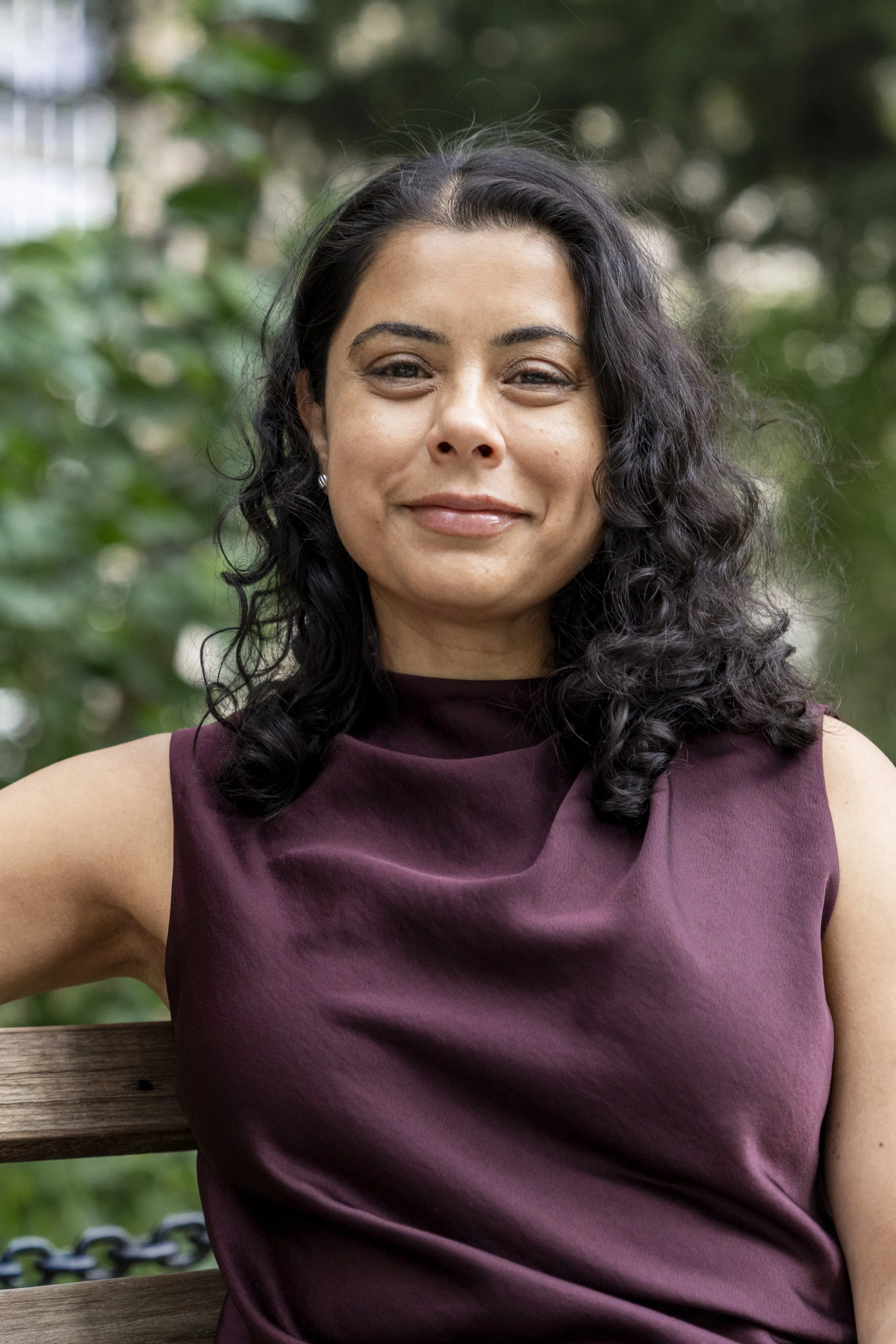
About Sarika S. Gupta, Ph.D.
I am an applied researcher and learning ecologist. I help practitioners and programs see how people, relationships, organizations, and contexts shape their work. Through self-to-system reflective inquiry, practitioners start with their own experiences and connect what they find to the programs and systems around them.
I began my career as a research assistant at the National Institute of Child Health and Human Development (NICHD) and then moved into the classroom to teach preschoolers with and without disabilities. With families and specialists, I designed learning experiences around each child's developmental and learning needs and each family's priorities. I saw how much our implementation depended on the conditions and relationships surrounding us, and I became increasingly interested in methodologies that invited practitioners and families to share their lived experiences.
My dissertation work, later published in The Qualitative Report, and my study of critical self-reflection in The New Educator grew from that interest. I wanted to understand what practitioners experienced and how creating space for reflection could make visible the knowledge they were using.
Yoga entered the middle of that work. In 2008, I began practicing Iyengar yoga and Pranayama, alongside running. Through that practice, I developed a capacity to observe myself, reflect on my positionality, and notice how institutional conditions shaped what I could see and do. The practice became a vehicle for finding my place within a larger system.
Over time, my research and my contemplative practice came together. Drawing on life mapping, situational mapping, and practice mapping, as well as participatory design and critical reflection, I developed contemplative mapping as a way to explore what influences a practitioner's work and what conditions make it possible for them to teach, partner, and navigate complex systems. I bring a strengths-based lens to this work.
My work has moved from classrooms into complex systems. I coached practitioners on a National Institutes of Health (NIH)-funded study, trained as a doctoral fellow at the U.S. Department of Education's Office of Special Education Programs (OSEP), provided technical assistance through the DaSy Center (Center for Individuals with Disabilities Education Act [IDEA] Early Childhood Data Systems) at Johns Hopkins University, and managed the research portfolio for the Pew Center on the States' Home Visiting Campaign.
I have prepared teachers at George Mason University, George Washington University, and Hunter College, where I also led a study of teacher wellbeing in inclusive preschool settings. I have led evaluation studies with the Maryland State Department of Education through the University of Maryland at College Park, and I have directed a Foundation for Child Development-funded study at Bank Street College of Education in partnership with the New York City Public Schools Division for Early Childhood Education (DECE) and Division for Inclusive and Accessible Learning (DIAL). Much of this work centered on preschool inclusion, educator capacity, and systems-level change. It has depended on collaborating with families, practitioners, programs, leaders, and agencies to translate what we learned into actionable recommendations for systems improvement.
I founded Ecological Learning Partners LLC to bring this work into partnership with practitioners. I help them build the capacity to examine their own experience, see the conditions shaping their work, and connect those insights to the systems around them. Each engagement begins with the knowledge, practices, relationships, and strengths people bring and asks what becomes possible when we make them visible.
My writing leading to contemplative mapping has been published in Young Exceptional Children, Yoga Samachar, The New Educator, The Qualitative Report, Distance Learning, Edutopia, Contemporary Issues in Early Childhood, Lion's Roar, Educational Leadership, and NNERPP Extra (National Network of Education Research-Practice Partnerships). I also document this methodology in my public blog, Mapping from the Margins.
I hold a Ph.D. in Special Education, completed a postdoctoral fellowship in Early Childhood Special Education Leadership and Policy, and am completing an M.S. in Data Science to extend this work.
Let’s Talk
Ecological Learning Partners LLC works with practitioners and leaders across learning communities, programs, and systems who want to reflect on what shapes their practice and their relationships.
Start here.
Publications Across Ecological Levels
-
Gupta, S. S. & Nagasawa, M. (2023). WeDesign: Conceptualizing a process that invites young children to CoDesign inclusive learning spaces. Contemporary Issues in Early Childhood. https://doi.org/10.1177/14639491231179000
Gupta, S. S. (2023). Building pre-k students' skills to CoDesign the classroom. Edutopia. https://www.edutopia.org/article/pre-k-classroom-design
Gupta, S. S. (2022). How preschool teachers can benefit from mindful thinking. Edutopia. https://www.edutopia.org/article/how-preschool-teachers-can-benefit-mindful-thinking
Gupta, S. S. (2022). Using project-based learning in professional development for preschool teachers. Edutopia. https://www.edutopia.org/article/using-project-based-learning-professional-development-preschool-teachers
Gupta, S. S. (2020). Voices from the field: Why aren't we talking about teacher well-being with inclusion? Young Exceptional Children, 23(2), 59-62. https://doi.org/10.1177/1096250619846581
Gupta, S. S. & Glen, J. (2020). Storytelling in a rock study: Using emergent learning and universal design to promote every child's learning in an inclusive preschool classroom. Childhood Explorer. https://www.childhoodexplorer.org/emergentcurriculum
Gupta, S. S. (2019). Engaging young children and families as design partners in the learning process: Reflections from an inclusive preschool classroom in Washington, DC. Childhood Explorer. https://www.childhoodexplorer.org/design-partners
Gupta, S. S. & Daniels, J. (2012). Coaching and professional development in early childhood classrooms: Current practices and recommendations for the future. NHSA Dialog, 15(2), 206-220. https://doi.org/10.1080/15240754.2012.665509
-
Gupta, S. S., & Zhu, X. (2026). Life mapping: Redefining bias training. ASCD Educational Leadership, 83(8). https://www.ascd.org/el/articles/redefining-bias-training
Gupta, S. S., Cheatham, G. A., Strassfeld, N., Zhu, X., Medellin, C. & Nagasawa, M. (2024). Examining the ecology of preschool inclusion in New York City: A mixed-methods study underway. Contemporary Issues in Early Childhood. https://doi.org/10.1177/14639491241229229
Gupta, S. S. & Rous, B. S. (2016). Understanding change and implementation. How leaders can support inclusion. Young Children, 71(2), 82-91. https://www.jstor.org/stable/ycyoungchildren.71.2.82
Lieber, J., Butera, G., Hanson, M., Palmer, S., Horn, E., Czaja, C., Diamond, K., Goodman-Jansen, G., Daniels, J., Gupta, S., & Odom, S. (2009). Factors that influence the implementation of a new preschool curriculum: Implications for professional development. Early Education and Development, 20(3), 456-481. https://doi.org/10.1080/10409280802506166
Technical Reports:
Gupta, S. S., & Zhu, X. (2026). Preschool Program Ecologies, Equitable Referrals, and Inclusive Practices in New York City: Findings and Recommendations from a Two-Site Study of NYC Early Education Centers [Technical Report]. New York: Ecological Learning Partners. 49 pages.
Gupta, S. S. & Guha, M. L. (2019). Conversations About Inclusion at the Center for Young Children at the University of Maryland, College Park: Final Summary. New York: Hunter College CUNY. 33 pages.
Book:
Gupta, S. S. (Ed.) (2014). First steps to preschool inclusion: How to jumpstart your programwide plan. Baltimore, MD: Brookes.
-
Gupta, S. S. (2025). The myna bird knows her name. Lion’s Roar-Bodhi Leaves. https://www.lionsroar.com/the-myna-bird-knows-her-name/
Gupta, S. S. (2021). Mapping the design and facilitation of critical self-reflection in a culminating clinical course for early childhood special education teacher candidates. The New Educator, 18(1-2), 42-60. https://doi.org/10.1080/1547688X.2021.2005855
Gupta, S. S. & Lewin-Smith, J. (2020). Employing design-thinking to create opportunities for ECSE teacher candidate reflection through infographic design in an online course. Distance Learning, 17(2), 11-23.
Gupta, S. S. (2020). Building practitioner resilience for change in EI/ECSE. Young Exceptional Children, 24(1), 3-15. https://doi.org/10.1177/1096250620913258
Gupta, S. S. (2019). Unraveling resistance in my journey to truth. Yoga Samachar, 23(1), 47-48. https://issuu.com/iynaus/docs/22_yoga_samachar_ss2019/s/11206351
-
Gupta, S. S., & Zhu, X. (2026). Using situational mapping to explore collaborative dynamics in research-practice partnerships. NNERPP Extra, 8(1), 12-20. https://nnerppextra.rice.edu/resources/how-might-situational-mapping-be-used-in-rpps/
Gupta, S. S., Sherif, V., & Zhu, X. (2023). Re-examining state Part C early intervention leaders' views through a positive lens on leadership: A qualitative secondary analysis. The Qualitative Report, 28(2), 517-543. https://doi.org/10.46743/2160-3715/2023.4786
Tirrell-Corbin, C., Sweet, S., Gupta, S., & Lieber, J. (2016). Evaluation of the birth to five service delivery models in Maryland – Phase I. College Park: University of Maryland Center for Early Childhood Education and Intervention. 269 pages.
Tirrell-Corbin, C., Lieber, J., Cummings, K., Jones Harden, B., Klein, E., Silverman, R., & Gupta, S. (2016). Evaluation of the efficacy of Maryland's Race to the Top—Early Learning Challenge grant. College Park: University of Maryland Center for Early Childhood Education and Intervention. 183 pages.
Ruggiero, T., Gupta, S., Nicholas, A., & Mauzy, D. (2016). State spotlight on data use. Maryland: Establishing partnerships to build data use capacity. Menlo Park, CA: SRI International.
LaRocco, D. J., Bruns, D. A., Gupta, S. S. & Sopko, K. M. (2014). National early childhood special education leadership summit: Final report February 2014.
Gupta, S. S. (2011). Strategies to facilitate and sustain the inclusion of young children with disabilities [Policy Brief]. Denver, CO: The Colorado Center for Social Emotional Competence and Inclusion. 4 pages.
Sarpatwari, S. S. (2006). A qualitative analysis of the 1st Annual Joint Technical Assistance and Dissemination Conference. Washington, DC: U.S. Department of Education, Office of Special Education Programs. 10 pages.